closet audit
Closet Audit With AI: What to Keep, Repair, or Donate
A practical closet audit workflow using a digital wardrobe and AI try-on to decide what to keep, repair, donate, replace, or style again.
TL;DR
A closet audit works better when you stop asking “Do I like this?” and start asking “What job does this item still do?” Use a digital wardrobe to make uncertain clothes visible, test them in real outfits, then sort each item into keep, style again, repair, replace, donate, sell, or archive.
AI should not make the final decluttering decision for you. It should create better evidence: outfit previews, duplication checks, missing-piece patterns, and reminders of clothes you own but forget to wear.
Table of contents
- Why closet audits get stuck
- The Chiffon closet audit workflow
- Start with the uncertainty pile
- Use outfit tests instead of vibes
- Sort clothes into seven decisions
- What AI can and cannot decide
- Closet audit FAQ
Why closet audits get stuck
Most closet audits start with good intentions and stall in the same place: the maybe pile.
The maybe pile is where useful but confusing clothes go. A blazer that almost works. A dress you wore once. Jeans that fit but never feel right. A shirt you keep because the color is beautiful, even though you never choose it.
The problem is that “keep or donate” is too blunt. Clothes usually need a more specific diagnosis:
- It works, but only with the right styling.
- It fits, but needs tailoring.
- It is duplicated by a better item.
- It belongs to a past version of your routine.
- It needs different shoes, layers, or care than you are willing to give.
- It still has value, but not for your current wardrobe.
A digital wardrobe makes these patterns easier to see. Instead of holding one item in your hand and relying on memory, you can compare it with what you own, test outfits, and make the decision less emotional.
The Chiffon closet audit workflow
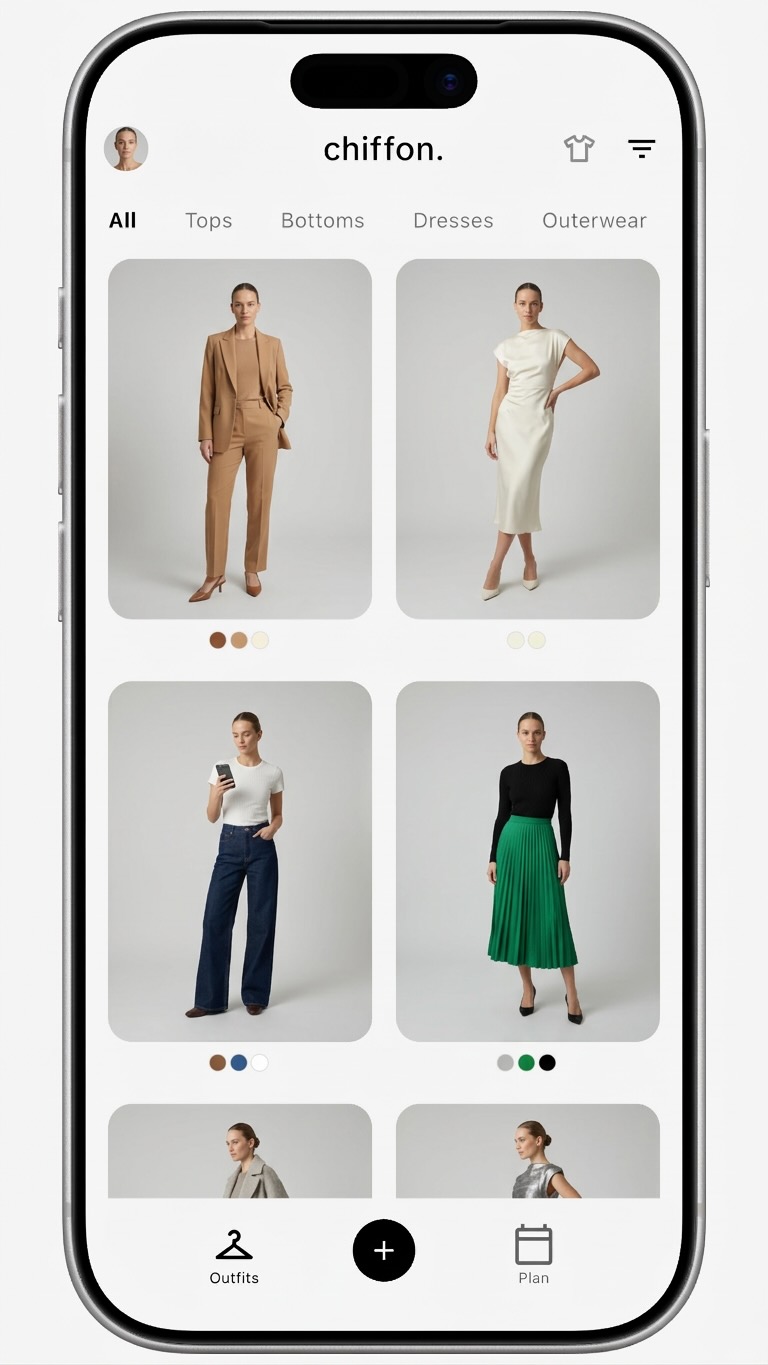
Chiffon is useful for closet audits because it connects saved clothes with AI outfit previews. The workflow is simple:
- Add the items that create uncertainty.
- Add the clothes you actually wear with them.
- Preview two or three realistic outfits.
- Compare against similar saved pieces.
- Assign a specific next action.
The goal is not to digitize every sock before you can begin. The goal is to resolve the clothes that keep taking up mental space.
Use this audit board:
| Decision | Meaning | Next action |
|---|---|---|
| Keep | Works often and fits your life | Keep visible |
| Style again | Good item, weak outfit habits | Build two saved outfits |
| Repair | Useful but blocked by condition | Tailor, clean, mend, or replace hardware |
| Replace | Role is valid, item is wrong | Buy only after defining the replacement job |
| Donate | Wearable, but no longer useful to you | Remove within a set deadline |
| Sell | Valuable, but not serving your wardrobe | Photograph and list it |
| Archive | Seasonal, sentimental, or occasional | Store intentionally, not in the active closet |
This is more useful than a yes/no audit because each category tells you what happens next.
Start with the uncertainty pile
Do not begin with your easiest favorites. They already earned their place. Start with the clothes that cause friction.
Good first candidates:
- Items you have not worn this season
- Pieces you try on and remove
- Clothes that need one imaginary item to work
- Duplicates where one version always wins
- Event clothes with no current event
- Purchases that still have tags
- Items that need tailoring, cleaning, or repair
Add 10 to 20 of these to your digital wardrobe. Then add the clothes that would realistically support them: your most-worn jeans, trousers, shoes, layers, and everyday tops.
This creates the right test environment. A difficult skirt should not be judged against fantasy styling. It should be judged against the shoes, tops, weather, and occasions you actually have.
Use outfit tests instead of vibes
The strongest closet audit question is not “Does this spark joy?” It is “Can I build real outfits with it?”
For each uncertain item, run a three-outfit test:
- One outfit for the most likely use case.
- One outfit with your most-worn shoes or layer.
- One outfit that tests whether the item can do something different.
If a shirt only works with one specific pair of trousers, it may still be worth keeping, but now you know it is specialized. If a jacket improves several outfits, it probably deserves a more visible place. If a dress needs shoes, tailoring, and an event you do not have, it may belong in archive, resale, or donation.
AI virtual try-on is helpful here because it turns vague hesitation into visual evidence. You can compare the item in context before spending half an afternoon changing clothes.
For the comparison method, use the guide to AI virtual try-on from your own clothes.
Sort clothes into seven decisions
Keep
Keep items that fit, feel good, and appear in real outfits. These do not need a long argument. Make them easy to see and repeat.
Style again
Some clothes are not bad; they are under-styled. If an item works in previews but you never reach for it, save two complete outfits with it. The next action is practice, not removal.
Repair
Repair candidates are useful items blocked by condition. Examples include loose buttons, worn hems, missing closures, stains that need treatment, or pieces that need tailoring.
Do not let repair items live forever in the active closet. Set a deadline. If you will not repair it, the real decision may be donate, sell, or recycle.
Replace
Replacement is for a valid wardrobe role with the wrong item. Maybe you need black trousers, but the current pair pinches. Maybe the white shirt is useful, but the fabric is too sheer.
Define the job before shopping. A good replacement brief sounds like: “machine-washable white shirt, not sheer, works under the navy blazer, comfortable for work travel.”
Donate
Donate wearable clothes that no longer serve your wardrobe and are unlikely to be sold. The key is removing them promptly. A donation bag that sits for months is just another storage zone.
Sell
Sell items with resale value when the effort is worth it. Photograph them, set a listing deadline, and avoid keeping them in the active closet while you wait.
Archive
Archive clothes that are seasonal, sentimental, maternity-specific, formal, or genuinely occasional. Archiving is not avoidance if the reason is clear and the item is stored intentionally.
What AI can and cannot decide
AI can help with the evidence side of a closet audit. It can make clothes visible, suggest combinations, and expose duplication. It can show that one jacket works across five outfits while another only works in theory.
But it cannot decide personal comfort, memory, identity, body changes, fabric feel, or whether a sentimental item matters to you.
Use this boundary:
| Decision area | Let AI help with | Decide yourself |
|---|---|---|
| Outfit compatibility | Preview combinations | Whether you feel like yourself in them |
| Duplication | Compare similar saved items | Which one feels better to wear |
| Repair value | Identify blocked useful items | Whether repair is worth time and money |
| Donation | Show low-use patterns | Whether the item has personal meaning |
| Replacement | Define the missing role | Whether buying now is necessary |
A good AI closet audit should make you less impulsive, not more ruthless. The best outcome is a wardrobe where useful clothes are easier to find and uncertain clothes have a next action.
Turn the audit into a monthly habit
A closet audit does not need to be a dramatic seasonal purge. A lighter rhythm is easier to maintain.
Try this monthly review:
- Add recent purchases to your wardrobe app.
- Mark anything that needs repair or cleaning.
- Save outfits that worked well.
- Review items you avoided wearing.
- Choose one uncertain item and run the three-outfit test.
- Remove donation or resale items from the active closet.
Then do a deeper seasonal review when weather, travel, work routines, or events change.
For setup help, start with building a digital wardrobe you can actually use. For shopping discipline after the audit, use virtual try-on as an online shopping filter.
Closet audit FAQ
Can AI help with a closet audit?
AI can help organize the closet audit by making clothes visible, suggesting outfit tests, and identifying items that need styling, repair, replacement, or removal. It should support the decision, not make it alone.
What should I add to a digital wardrobe before a closet audit?
Add the clothes that create the most uncertainty first: items you rarely wear, pieces you keep saving for later, duplicates, expensive mistakes, and clothes that need repair.
Should I donate clothes that do not appear in AI outfit previews?
Not automatically. Use the previews as evidence, then check fit, comfort, condition, sentimental value, and whether the item serves a real future need.
How often should I do a digital closet audit?
A light monthly review works well for recent purchases and repairs, while a deeper seasonal audit is better for storage, weather changes, and major wardrobe edits.
Make every maybe item accountable
The point of a closet audit is not to own the fewest clothes. It is to make your wardrobe easier to use.
When every uncertain item has a next action, the closet gets quieter. Favorites become easier to reach. Repair projects stop hiding. Shopping gaps become clearer. And the maybe pile stops taking up space without giving anything back.