virtual try-on
Use Virtual Try-On as an Online Shopping Filter
A practical virtual try-on shopping workflow for testing new clothes against your real wardrobe before you buy, return, or regret them.
TL;DR
Virtual try-on is most useful for online shopping when it acts as a filter before checkout. Test a new item against clothes you already own, build three realistic outfits, compare it with similar pieces in your wardrobe, and then check fit, fabric, measurements, and returns.
The goal is not to make every purchase look good. The goal is to identify the maybes before they become returns.
Table of contents
- Why product photos are not enough
- The shopping filter workflow
- What to test before buying
- What virtual try-on cannot verify
- The three-outfit rule
- How Chiffon fits into the buying decision
- Virtual try-on shopping FAQ
Why product photos are not enough
Online product pages are designed to make one item look desirable. The lighting is controlled, the model is styled, the outfit is chosen to flatter the garment, and the context is usually cleaner than real life.
That can help you understand the item, but it does not answer the buying question that matters most:
Will this work with the clothes I already own and the life I actually dress for?
This is where online shopping becomes risky. A jacket can look strong on a model and still fail with your jeans. A dress can photograph beautifully and still need shoes you do not own. A neutral top can seem versatile while duplicating three similar pieces in your wardrobe.
Virtual try-on helps when it moves the decision away from the store’s styling and into your real wardrobe context.
The shopping filter workflow
Use this before buying any item that is expensive, hard to return, outside your usual silhouette, or similar to something you already own.
- Save the item you are considering.
- Open your digital wardrobe.
- Choose three clothes you would realistically pair with it.
- Preview outfit combinations.
- Compare the new item with similar pieces you already own.
- Check sizing, fabric, measurements, care, and return terms.
- Buy only if the item still solves a real wardrobe problem.
This workflow adds a pause between wanting and buying. That pause is where weak purchases usually reveal themselves.
What to test before buying
Virtual try-on is especially useful for testing compatibility. You are not asking whether the item looks nice in isolation. You are asking whether it has a job in your wardrobe.
Use this checklist:
| Test | Ask this question | Weak signal |
|---|---|---|
| Outfit compatibility | Does it work with three clothes I own? | It only works with the product-page styling |
| Duplication | Do I already own this role? | It is almost identical to a piece I ignore |
| Silhouette | Does the shape fit my usual proportions? | It needs a full outfit rebuild to work |
| Formality | Does it match my real week? | It belongs to an imagined lifestyle |
| Maintenance | Will I care for it properly? | The fabric or care routine does not fit my habits |
| Return risk | Can I return it if fit is wrong? | Final sale, unclear sizing, or expensive returns |
The strongest buying candidates survive all six tests. The weakest ones only look good in a single generated image.
What virtual try-on cannot verify
Virtual try-on can reduce uncertainty, but it cannot remove the physical realities of clothing.
Before checkout, still check:
- Exact garment measurements when available
- Size chart and fit notes
- Customer reviews that mention sizing up or down
- Fabric composition, lining, stretch, and transparency
- Whether the item wrinkles, clings, or needs special care
- Return window, return cost, final-sale terms, and store credit rules
Two items can look similar in a preview and behave very differently in real life. A structured cotton shirt, soft rayon blouse, and stretch knit top can create different movement, comfort, and fit even when the generated outfit looks polished.
Use virtual try-on to decide whether the item deserves deeper investigation. Use product details to decide whether it deserves your money.
The three-outfit rule
For most non-essential purchases, build three realistic outfits before buying.
The outfits should come from your actual wardrobe:
- One outfit for the most likely use case.
- One outfit with your most-worn shoes or bottoms.
- One outfit that tests versatility outside the obvious styling.
For a blazer, that might mean work trousers, jeans, and a dress. For a pair of shoes, that might mean wide-leg pants, a skirt, and a casual travel outfit. For a top, that might mean work, weekend, and dinner.
If the item cannot produce three believable outfits, that does not automatically make it bad. It does mean the item is specialized. Buy it only if that specialized use is worth the space, cost, and care.
Compare against what you already own
The most overlooked shopping test is replacement value.
Before buying, compare the item with the closest thing in your wardrobe. Ask:
- Is the new item meaningfully different?
- Does it solve a problem the current item does not?
- Would I choose it over the similar item I already own?
- Does it help build outfits I cannot already make?
- Is it better enough to replace, not just add?
This is where a wardrobe app is more useful than a wishlist. A wishlist records desire. A digital wardrobe adds evidence.
Watch for the fantasy outfit problem
Many weak purchases belong to a fantasy outfit. The item is beautiful, but it fits a version of your week that does not happen often enough.
Look for warning signs:
- You need different shoes, a different bag, and a different lifestyle to wear it.
- It only works for an event you do not currently have.
- It requires a level of care you usually avoid.
- It duplicates something you already struggle to wear.
- It looks best only when styled exactly like the product photo.
Virtual try-on can make the fantasy visible. If the item does not work with your real wardrobe pieces, the problem is not your imagination. The item may simply not belong in your closet.
How Chiffon fits into the buying decision
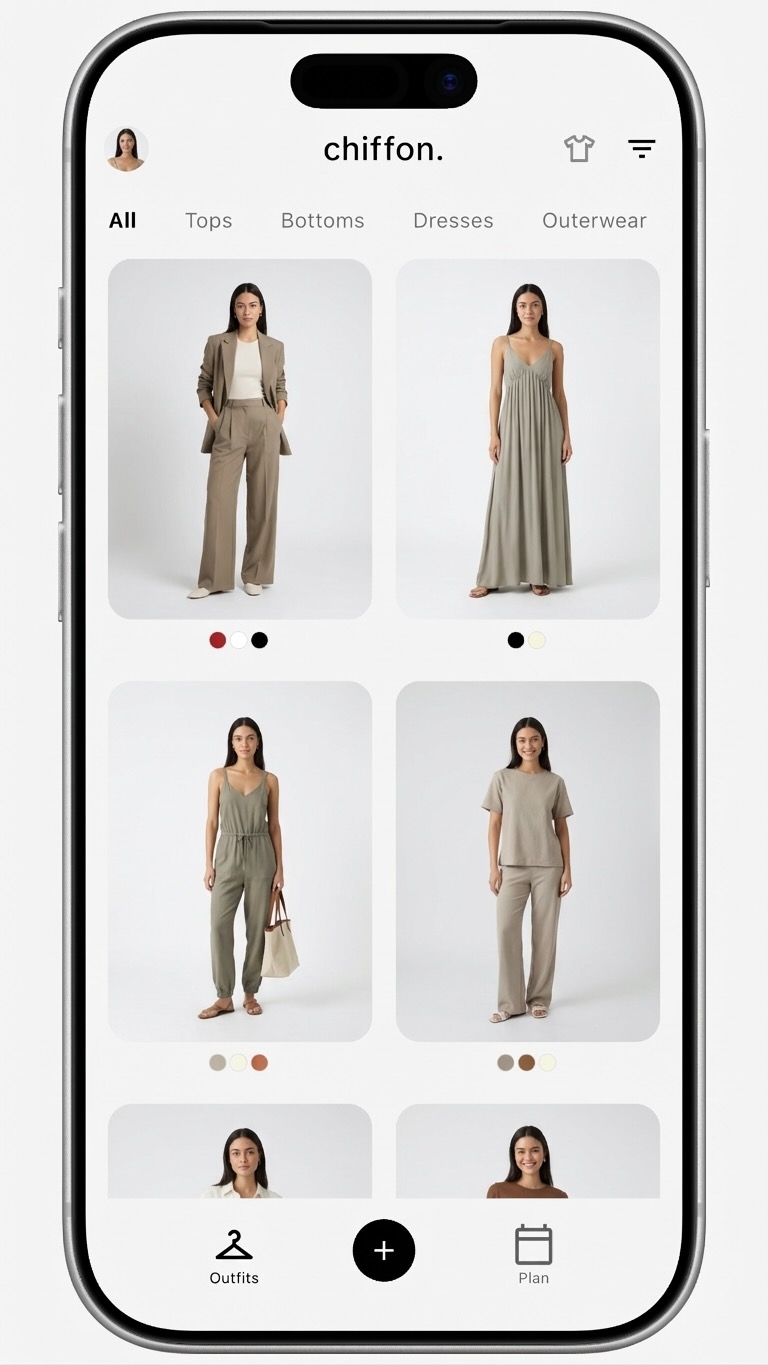
Chiffon connects the shopping question to your wardrobe. Instead of saving screenshots in a camera roll and guessing later, you can use a more practical loop:
- Save the clothes you wear most.
- Add or reference the item you are considering.
- Preview outfit options with your saved wardrobe.
- Compare the new item with similar pieces.
- Decide whether it fills a real gap.
That turns virtual try-on into a shopping filter, not just an image generator.
If you have not built the wardrobe side yet, start with building a digital wardrobe you can actually use. If you already have saved clothes, use the AI virtual try-on workflow for your own clothes to compare outfits more cleanly.
Virtual try-on shopping FAQ
Can virtual try-on help me shop online with more confidence?
Yes. Virtual try-on can help you compare a new item with clothes you already own, but it should be paired with measurements, fabric details, reviews, and return policies.
How many outfits should I test before buying clothes online?
For a non-essential purchase, test at least three realistic outfits from your existing wardrobe. If the item only works once, it may be less versatile than it looks.
Can virtual try-on prevent clothing returns?
Virtual try-on can reduce avoidable returns caused by style mismatch or weak outfit compatibility, but it cannot guarantee physical fit, fabric feel, or comfort.
What is the biggest mistake when shopping with virtual try-on?
The biggest mistake is trusting one polished preview. Better decisions come from controlled comparisons, practical product checks, and real wardrobe context.
Buy fewer maybes
The strongest shopping use case for virtual try-on is not buying more clothes. It is buying fewer maybes.
When you can test an item against your real wardrobe, compare it with similar pieces, and check practical details before checkout, the decision becomes calmer. Some items will become obvious yeses. Others will reveal that they only looked good in the product photo.
That is the value of a good shopping filter: it helps you stop before the wrong item enters your closet.